Buying guides
Choose portable, window, split, and bedroom air conditioners with practical sizing, noise, and installation checks.
Open guides →Free room cooling tools
Start with your room, your electricity tariff, and what you can install. Get a usable estimate, see its assumptions, and choose your next step.
Choose portable, window, split, and bedroom air conditioners with practical sizing, noise, and installation checks.
Open guides →Estimate BTU size, monthly electricity cost, and the air conditioner type that fits your room and installation limits.
Run a calculator →Compare cooling types on a 100-point AC Guide Score across efficiency, noise, install ease, and cooling power.
See scores →Diagnose not-cooling, leaking, freezing, smells, hose heat, and portable AC performance problems safely.
Open guides →Use verified free-first weather data and cached city pages to connect current heat with cooling decisions.
Check climate →Market Watch > Product Signals
A product discovery layer built from price snapshots, supplier links, Europe-fit scores, and approved video evidence. Rankings use market signals, not unsupported sales claims.
Open full market watch →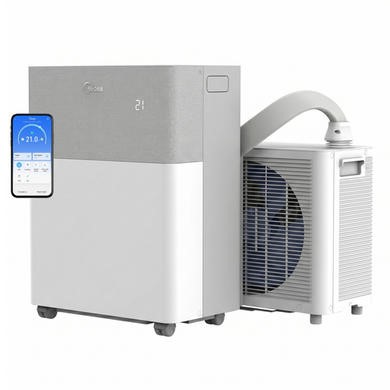
GBP 899.98 / 12,000 BTU / 18-42 m2
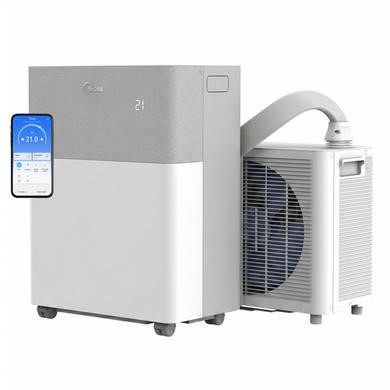
GBP 899.97 / 8,000 BTU / 12-30 m2

EUR 449.99 / 9,000 BTU / 14-24 m2

EUR 409.99 / 10,577 BTU / 10-24 m2
Planning checklist
Work through room size, running cost, window fit, and installation permission. This checklist is evergreen; current weather is shown on the city pages.
Air conditioning advice is easy to get wrong because the same unit can behave very differently in a small bedroom, a sunny apartment, a humid city, or a dry climate. This site is organized around practical decisions: what type of air conditioner fits the room, what size is realistic, how much it may cost to run, and what to check when a unit does not cool properly.
Start with room size before reading product-style guides.
TheBTU calculator helps estimate capacity from square footage, ceiling height, sun exposure, occupants, and heat load. Then use thetype finder to compare portable, window, split, and heat pump options against installation permission, window style, renter rules, noise sensitivity, and budget.
Cost matters after the type and size are plausible. A cheaper unit can become expensive if it runs longer, leaks heat through a poor seal, or is forced to cool a room beyond its capacity. The electricity cost calculatorturns watts, runtime, and local electricity price into a monthly estimate so readers can compare real operating scenarios instead of only upfront price.
The climate pages connect current city heat with cooling choices, but they are not an official weather warning service. Check the source and observation time on each city page before relying on its weather reading. During severe heat, official local weather and public health guidance should come first.
Common cooling decisions include portable air conditioners, heat pumps, split systems, window units, AC repair symptoms, energy efficiency, and installation questions. The guides avoid unsupported product rankings and focus on durable selection criteria: room size, venting, sound, humidity, maintenance, landlord limits, electrical load, and total seasonal cost. That structure makes the content useful whether the reader is in a European heat wave, a humid Asian city, a dry inland climate, or a North American apartment with window restrictions.
If you are comparing products, start with the market watch and buying guides. If you already own a unit that is not working well, use the troubleshooting pages to separate basic airflow, venting, drainage, and sizing problems from issues that need professional service. If local heat is the reason you are shopping, pair the climate pages with official weather and public health guidance before deciding how urgently to buy or run cooling.